Mamluk Sultanate
Also known as Sultanate of Cairo, Bahri Mamluks, State of the Turks
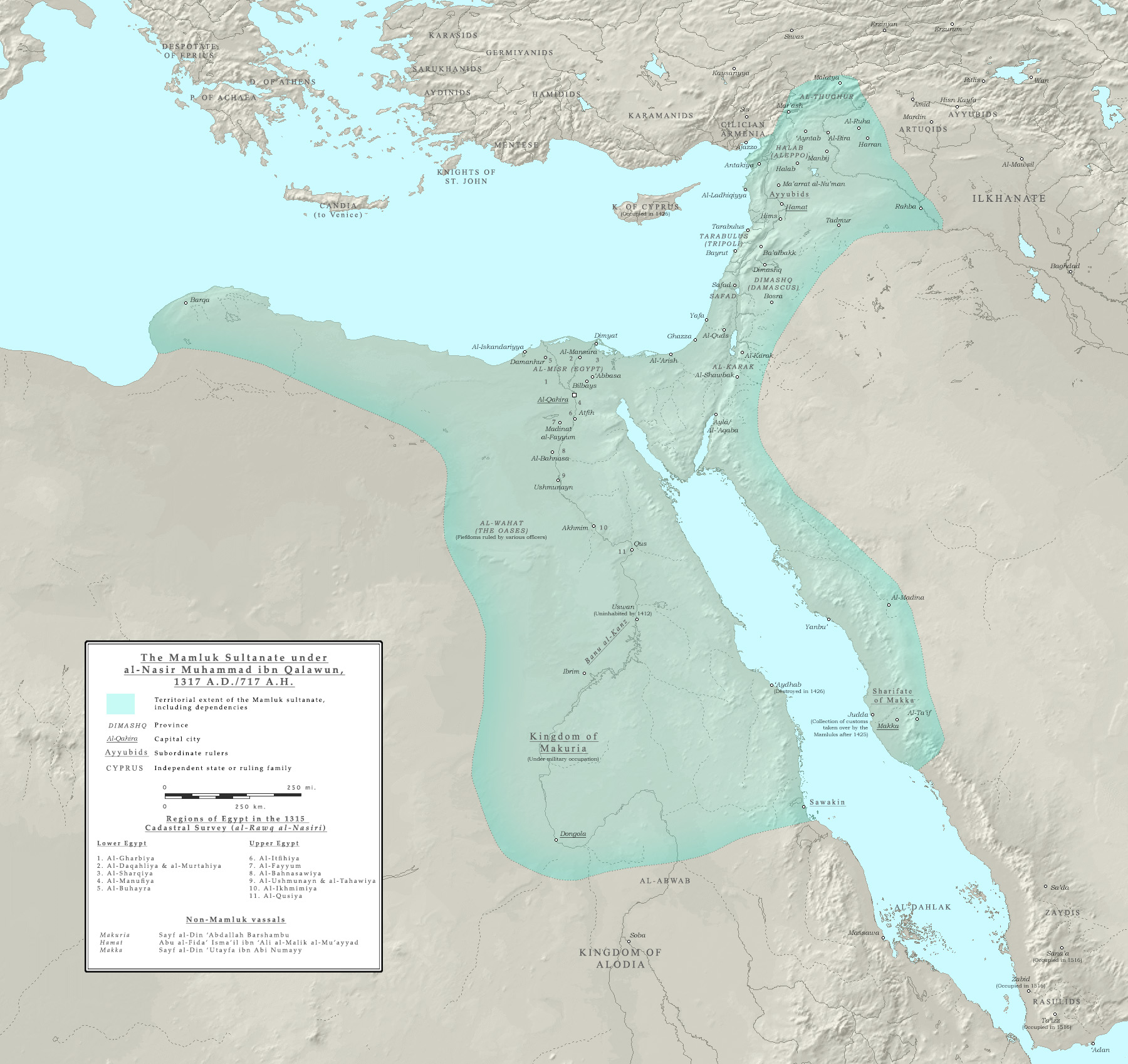
Slave-soldier sultanate of Egypt that destroyed the Mongol field army at Ain Jalut in 1260 and over the next three decades reduced every Crusader stronghold on the Levantine coast — Antioch in 1268, Tripoli in 1289, Acre in 1291.
The Mamluks ('owned ones') were Turkic and later Circassian slave-soldiers raised, trained, and emancipated by the Ayyubid sultans of Egypt as their household troops. In 1250, after the corps drowned Louis IX's crusade at Mansura, they assassinated the heir of their late master al-Salih Ayyub and installed one of their own commanders as sultan, beginning a unique political system in which sultanate passed not by inheritance but by promotion through a barracks elite.
The new regime was tested almost at once. In September 1260 the Mamluk army under Qutuz and his lieutenant Baybars met and shattered a Mongol expeditionary force at Ain Jalut in the Jezreel Valley — the first decisive defeat of the Mongols and the moment Egypt established itself as the indispensable shield of the Sunni world. Within months Baybars had murdered Qutuz and taken the throne.
Baybars (r. 1260–77) and his successors Qalawun and al-Ashraf Khalil pursued a sustained reduction of the Crusader states. Caesarea, Arsuf, Safed, and Antioch fell to Baybars in the 1260s; Krak des Chevaliers in 1271; Tripoli to Qalawun in 1289; and Acre, after a six-week siege, to al-Ashraf Khalil on 18 May 1291. With it the kingdom of Jerusalem ended on the mainland, and the Mamluk sultanate became the master of the Levant for the next two and a quarter centuries.
Read more on Wikipedia: English article · עברית