Ayyubid Dynasty
Also known as Banu Ayyub, Sultanate of Egypt and Syria
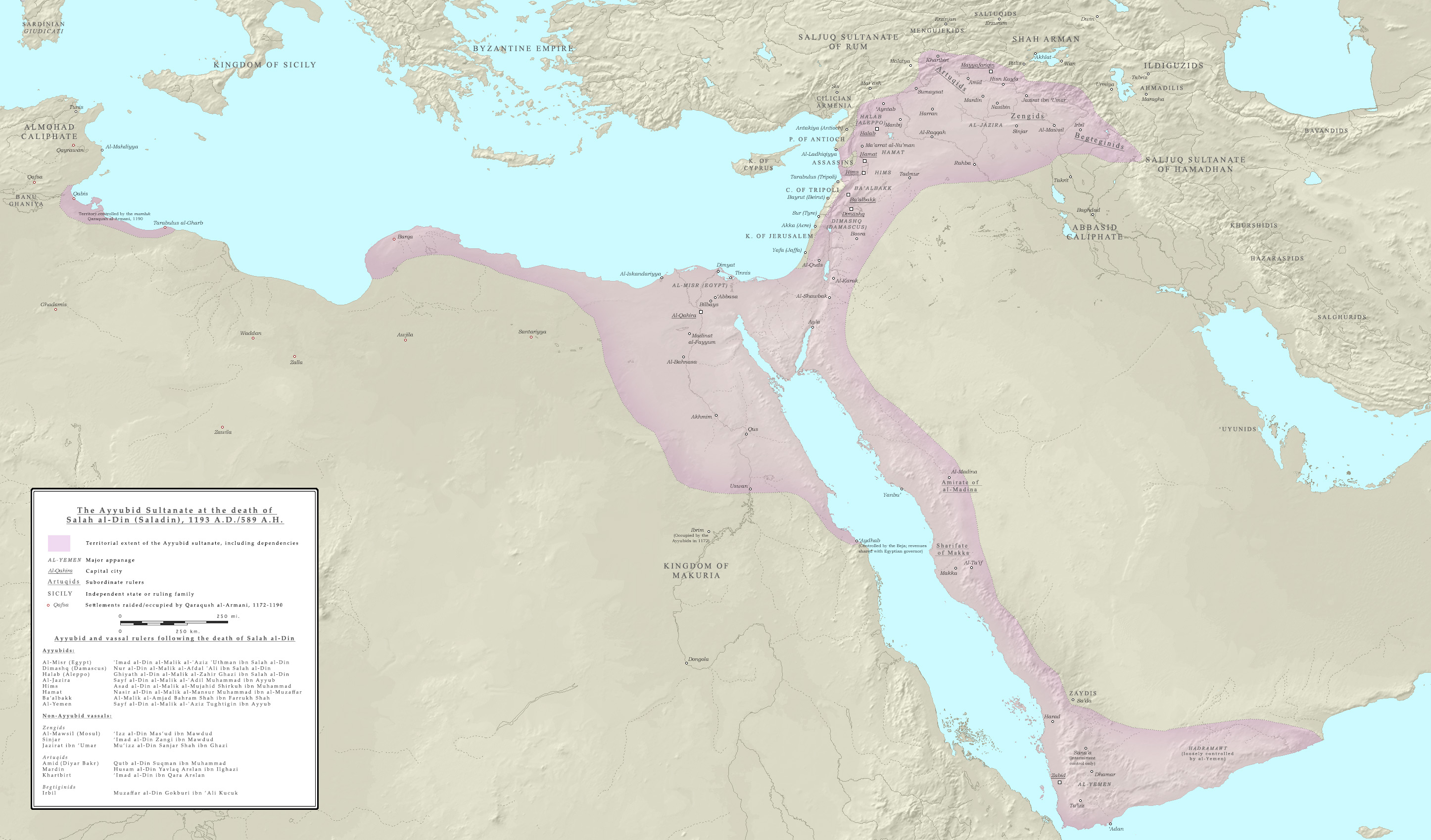
Sunni Kurdish dynasty founded by Saladin on the ruins of the Fatimid Caliphate; the Ayyubid state was the central Muslim power against the Crusader kingdom from 1187 until the Mamluk takeover of Egypt in 1250.
Saladin abolished the Fatimid Caliphate of Cairo in September 1171 and on Nur ad-Din's death three years later began assembling a single Sunni state that by 1186 stretched from Cairo to Aleppo. His decisive victory at Hattin in July 1187 destroyed the Frankish field army of Jerusalem, broke open every interior castle of the kingdom, and reduced the Crusader states to a coastal strip — the political settlement under which the Latin East lived for the next century.
After Saladin's death in 1193 the Ayyubids were a confederation rather than a centralised sultanate: branches in Egypt, Damascus, Aleppo, Hama, Homs, and the Jazira fought, allied, and intermarried for influence over the family head. That decentralisation became the basis of a working modus vivendi with the Franks of Acre — al-Adil and al-Kamil ran a frontier of pragmatic truces, prisoner exchanges, and the famous return of Jerusalem to Frederick II without a battle in 1229.
The Egyptian core fell in 1250 when the slave-soldier corps of the late sultan al-Salih Ayyub, fresh from defeating Louis IX's crusade at Mansura, murdered his son Turanshah and installed one of their own as sultan. The Ayyubid name continued in declining Syrian principalities through the 1260s, but the Mamluk Sultanate was the political successor and the new opponent of the Latin East.
Read more on Wikipedia: English article · עברית